
Home / Customs signals
Parcel contents and weight: what the commercial warnings mean
A truthful declaration can still be read as a shipment of stock. Oopbuy names the signals that push customs that way, and they are about the box, not the paperwork.
The operator warning is not a customs classification rule
Oopbuy’s dated help pages discuss weight around 10 kg, large parcels and many identical goods as reasons a parcel may receive more scrutiny. They do not establish that a lighter parcel is personal or a heavier one is commercial. The destination rules, contents, purpose and documents decide the actual treatment.
A parcel can be accurately declared and still need additional clearance documents. Keep the order records and explain the real intended use.
Describe the actual quantity and purpose
Several identical products may be gifts, shared purchases, business stock or personal goods; a visual count alone cannot decide. Do not change descriptions or quantities to make a parcel appear different. If goods are for business or resale, ask about the applicable import process before ordering.
Our worksheet raises a review prompt at five units, but that is an editorial reminder. It is not an official allowance, and four units are not automatically exempt from anything.
Measure the complete parcel
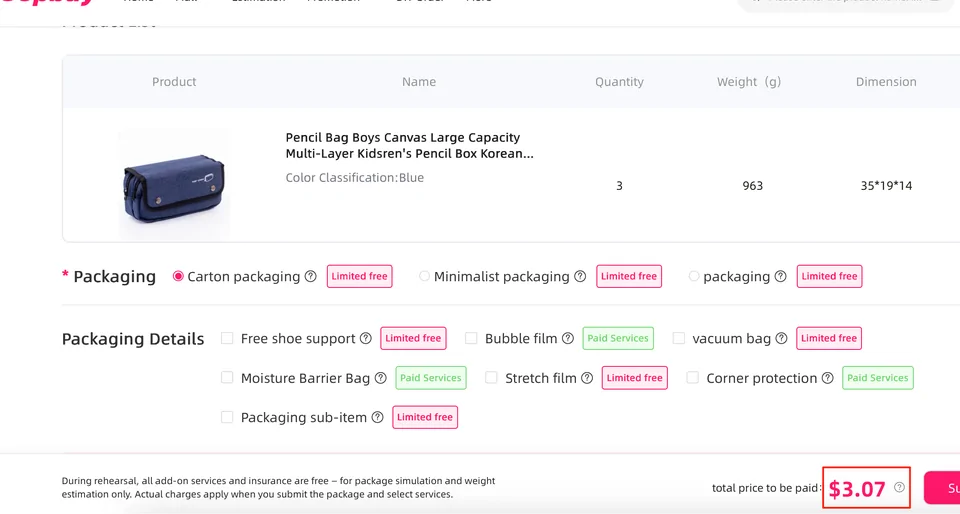
QC weights describe items at intake. The final carton, protection and retained boxes affect the packed weight and volume. Rehearsal can provide a better packing estimate, but its fee, route and processing conditions need checking in the account.
Some routes bill using the larger of scale and volumetric weight, with their own divisor and rounding. Those billing rules do not determine whether customs classifies goods as commercial.
Compare separate parcels for practical reasons
Separate parcels may be useful when goods need different routes, protection or delivery timing. They can repeat first-weight and handling charges. Compare complete quotes and the consequences for each item.
Splitting does not guarantee a customs result, remove reporting obligations or necessarily leave the total tax unchanged. Apply the rules to each real shipment, and ask about combined or related consignments where relevant.
If the carrier asks for documents
Confirm the request through the carrier’s official tracking or support route. Provide the relevant invoice, purchase record, description and other requested documents privately. Keep the deadline and the response together with the parcel record.
A message that asks for payment or personal data should be checked through a verified channel. If an assessment seems wrong, use the destination’s review or refund process; do not replace a receipt with an invented figure.
Read route tax labels · Compare your item lines · Check delivery and evidence